
Contents
- 1 Introduction
- 2 Why Converting ETH to USD is Important
- 3 Step-by-Step Guide: How to Convert ETH to USD on BitZup
- 4 Tips & Best Practices for ETH→USD Conversions
- 5 Fees & Timing Explained (with realistic expectations)
- 6 Risk & Security Considerations
- 7 Case Studies (Mistakes and Fixes)
- 8 A Clean, Repeatable ETH→USD Workflow
- 9 Troubleshooting: Common Hiccups and Simple Fixes
- 10 Record-Keeping for Taxes (and Sanity)
- 11 Security Deep Dive (Short and Practical)
- 12 A Realistic Example: Full ETH→USD Run
- 13 Quick-Reference Glossary
- 14 FAQs (Frequently Answered Questions)
- 15 Closing: How to Convert ETH to USD on BitZup
Introduction
Converting Ethereum (ETH) to USD is an essential skill for crypto traders, investors, and beginners who want to realize profits or manage funds in fiat currency. In 2025, the pace of the market is fast, spreads move, gas fees fluctuate, and banks still have their own settlement schedules. Getting ETH→USD right means you keep more of your gains and avoid painful delays. In this guide, I’ll walk you through exactly how to convert ETH to USD on BitZup with step-by-step instructions, plus practical tips on fees, spreads, timing, security, and withdrawals. You’ll see best practices, real-world examples, and frequent mistakes with fixes ..so this becomes your complete ETH→USD playbook.
What you’ll learn:
- A quick “straight answer” on converting ETH→USD in BitZup
- A clean, repeatable 5-step workflow from account setup to bank withdrawal
- How fees, spreads, and slippage really affect your received USD
- Timing strategies that help you keep an extra 0.5–1% per trade when conditions allow
- Security moves (2FA, address checks, whitelists) that stop avoidable losses
- Case studies, checklists, and a troubleshooting section for common hiccups
By the end, you’ll be confident converting with small test amounts first, then scaling smoothly when you’re ready.
Why Converting ETH to USD is Important
Converting ETH to USD sounds simple ..click sell, withdraw money ..but the reasons behind it matter:
- Realize Profits: After a rally, you might want to lock in gains into fiat.
- Liquidity Needs: Holding USD lets you pay bills, invest elsewhere, or move into other assets.
- Risk Management: If volatility spikes or you hit a portfolio limit, converting to USD can protect capital. –> How to stake crypto safely –> How to avoid Crypto Scams
- Operational Simplicity: Taxes, accounting, and reporting are often easier to do in fiat.
A practical observation from desk traders: monitoring the ETH→USD spread (the gap between buy and sell prices, plus any hidden price impact) can improve effective returns by 0.5–1% per trade if you’re patient and selective with timing. That might sound small, but it compounds over a year.
Using BitZup helps because you get transparent fees, clean order screens, and smooth bank withdrawals ..reducing friction at every step. It’s not magic; it’s just a workflow that respects details.
Step-by-Step Guide: How to Convert ETH to USD on BitZup
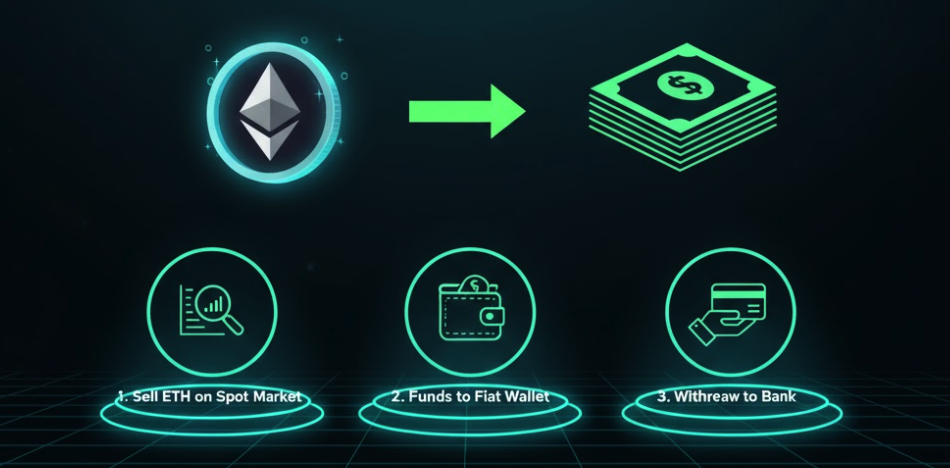
The easiest way to convert ETH to USD on BitZup is to log in, open the ETH→USD converter, pick how much ETH to sell, choose Market (for instant conversion) or Limit (for a target price), confirm, and then withdraw USD to your linked bank. That’s the clean flow. Start with a tiny test first so you understand the exact fees and timing on your account before scaling.
01. Step 1 – Create & Verify Your BitZup Account
What to do:
- Sign up with a verified email or mobile number.
- Complete KYC (ID, selfie, proof of address if asked).
- Enable 2FA using an authenticator app (stronger than SMS) and save your backup codes offline.
Why it matters:
Only verified accounts can convert ETH to USD and withdraw to bank accounts. 2FA and KYC reduce account-takeover risk and smooth compliance checks. It also unlocks higher conversion and withdrawal limits as your usage grows.
Small tip: create a “Security Note” in your password manager with: signup email, 2FA method, backup code locations, and the date you enabled everything.
02. Step 2 – Deposit ETH into Your BitZup Wallet
What to do:
- From your external wallet or another exchange, send ETH to your BitZup ETH deposit address.
- Confirm network: Ethereum mainnet. Don’t use L2 or alternative networks unless you explicitly see support for them in BitZup’s deposit screen.
- Send a tiny test first (like $5–$20 equivalent), especially the first time you deposit.
Why it matters:
Wrong network or wrong address = funds potentially lost or stuck. A tiny test proves you copied the address correctly, your wallet gas settings are fine, and the deposit route works for your specific account.
Extra care detail:
If you use a hardware wallet, glance at the on-device address verification. If you copy/paste on desktop, verify the first and last 4 characters match the on-screen address. Avoid manual typing.
03. Step 3 – Select ETH→USD Conversion (H3)
What to do:
- In BitZup, open Convert ETH→USD (or the Trade page if you prefer the order book).
- Enter the amount of ETH (or use a percentage selector like 25% / 50% / 100%).
- Choose Market for instant execution at current price, or Limit to set a specific USD price.
When to use Market vs. Limit:
- Market Order – You want speed and simplicity. Ideal for small to medium conversions where the order won’t move price much.
- Limit Order – You want a specific price or better. You’re willing to wait for the market to reach your target, which can be helpful in choppy markets or when you’re eyeing a technical level.
Why it matters:
Choosing the right order type avoids unnecessary slippage. For bigger conversions, a limit order or breaking the sell into smaller chunks can keep more dollars in your pocket.
04. Step 4 – Review Fees & Spread
What to check:
- Trading fee: BitZup’s standard trading fee is typically 0.1%–0.15% depending on tier/route.
- Network fee: Not for the conversion itself, but you’ll have paid gas when depositing ETH; and if you later withdraw USD, check if there’s a small bank network fee.
- Spread & slippage: The difference between quotes and the final execution. For small market orders, slippage is usually under 0.5%. For bigger orders, prefer a limit or staged sales.
Why it matters:
Fees and spread directly determine your received USD. If you’re converting a large amount, consider placing a limit order near the mid price, or splitting into tranches to reduce price impact.
Mini-math you can do in your head:
- If you sell 5 ETH at $3,000, gross is $15,000.
- A 0.1% trading fee is $15.
- If slippage costs 0.15%, that’s another ~$22.50 of effective cost.
- You’ll see this reflected in the net USD you get. Knowing these numbers builds confidence.
05. Step 5 – Confirm Conversion & Withdraw USD
What to do:
- Confirm the ETH→USD conversion on BitZup.
- Your USD balance updates instantly on the platform.
- Withdraw USD to your verified bank account.
- Monitor settlement: platform USD is instant; bank settlement is typically 1–2 business days (varies by region and bank cut-offs).
Why it matters:
Most delays happen because of bank details or verification mismatches. Double-check your beneficiary name matches your account name, the account number is correct, and your bank supports the rails used.
If a withdrawal fails:
Carefully read the error, correct details, and retry. Keep a screenshot of your bank info handy to reduce typos.
Tips & Best Practices for ETH→USD Conversions
- Turn on 2FA before you do anything value-bearing.
- Whitelist withdrawal bank accounts if BitZup supports it ..adds a lock against sneaky changes.
- Double-check bank details before each new withdrawal.
- Watch Ethereum gas when sending from external wallets to BitZup. If gas spikes, wait for calmer times to do your deposit.
- Mind the market: If ETH is spiking wildly, a limit order can protect you from getting a poor fill.
- Use app alerts: Price and spread alerts help you time conversions without staring at charts.
- Test runs: Do a tiny conversion and tiny USD withdrawal. You’ll know fees and settlement time on your setup ..not just what a page says.
- Document your flow: Note deposit TXID, conversion details, and bank withdrawal reference. It helps for tax and for support if you ever need help.
Fees & Timing Explained (with realistic expectations)
- BitZup Conversion Fee: ~0.1–0.15% per trade route (your tier may improve with volume).
- Deposit Fee: Sending ETH in requires gas (paid on your external wallet). BitZup typically does not charge for receiving.
- Withdrawal Fees (USD): Usually low or fixed; depends on rails (ACH/SEPA/etc.) and region.
- Settlement Times:
- Platform USD: immediate after trade confirmation.
- Bank withdrawal: typically 1–2 business days (earlier if your bank posts quicker, longer if holidays/weekends).
- Platform USD: immediate after trade confirmation.
Why this matters:
If you’re converting because of a price target, be aware that USD in your account is instant, but cash in your bank follows banking hours. If you need funds on a specific date, plan backward by 1–2 days.
Pro timing trick:
If ETH fees are high at the moment you intend to deposit, wait 30–90 minutes and recheck. Gas regimes swing. Deposit when gas is calmer, do your conversion, and you’ll avoid wasting money before you even sell.
Risk & Security Considerations
- Verify network & address when depositing ETH. Ethereum mainnet only, unless the deposit page explicitly offers another network.
- Beware phishing: Always open the official BitZup app or your own bookmark. Don’t click sponsored ads to login.
- 2FA and whitelists: Turn them on. They block a ton of account-takeover scenarios.
- Start small: Tiny deposits and conversions teach you everything you need about fees and timing with no stress.
- Email and device hygiene: Enable login and withdrawal email alerts. Keep your phone updated. Avoid public Wi-Fi for financial actions.
- Don’t save addresses in screenshots: Use the copy button and verify on-screen. For larger moves, do a $5 test first ..always.
Case Studies (Mistakes and Fixes)
Case 1: The “All-In Market Sell” Slippage Surprise
What happened:
A user converted a big chunk of ETH using a single market order during a short-lived volatility spike. The fill was okay, but slippage added roughly 0.4% more cost than expected.
Fix next time:
Split the sell into 3–4 tranches or use a limit order slightly inside the spread. The user saved ~0.3% on a similar-sized conversion later by being patient and placing staged orders.
Case 2 : Gas Cost at the Wrong Time
What happened:
A user deposited ETH from a self-custody wallet during a network rush (mint frenzy). They paid 3–4x normal gas just to deposit.
Fix next time:
Wait for calmer gas (often off-peak hours), or schedule deposits when you’re not competing with congested activity. The conversion fee didn’t change, but total cost improved significantly.
Case 3: Bank Mismatch Delay
What happened:
Withdrawal name didn’t match exactly with the user’s bank account name (middle name mismatch). Funds bounced back after 24 hours.
Fix next time:
Update beneficiary details to exactly match the bank record. Keep a screenshot of the bank’s official account name to avoid typos.
Case 4: Spreads and “Hidden” Costs
What happened:
A user looked at the mid price of ETH/USD elsewhere and expected that number, but didn’t account for the spread on the route they used. Their realized USD was slightly lower.
Fix next time:
Check the effective rate on the confirmation screen, not just the mid price. If the spread is wide, try a limit order or wait for tighter conditions.
A Clean, Repeatable ETH→USD Workflow
- Security first: 2FA on; email alerts on; device updated.
- Tiny test deposit: Send $10–$20 worth of ETH to BitZup (first-time only).
- Tiny test conversion: Convert a small amount and withdraw a small USD amount to your bank.
- Scale deposit: Send your intended ETH amount when gas is calm.
- Choose order type: Market for speed (small orders), limit for price (big orders).
- Check fee/spread: Confirm the effective rate looks fair for current market conditions.
- Convert: Execute your plan (single trade or staged).
- Withdraw USD: Double-check bank info; note expected settlement window.
- Record: Save TXID, trade ID, and bank reference for your own log (helps at tax time and if support is needed).
Rinse and repeat. Boring is good when moving money.
Timing Tactics Without Overcomplicating
- Avoid the stampede: If ETH is ripping on a big headline, spreads can widen. If you’re not rushing, place a limit sell or give it an hour for the order book to normalize.
- Use alerts: Set alerts for ETH price levels where you’re happy converting a portion.
- Staggered exits: If you’re selling a large stack, convert in tranches (e.g., 40% → 30% → 30%) at incremental targets. You’ll average a fair price and reduce regrets.
- Don’t fight your plan: If your risk rule said “convert at X,” honor it. Process beats emotions.
Troubleshooting: Common Hiccups and Simple Fixes
- Deposit pending: Check the on-chain transaction. If confirmed on Ethereum but not credited yet, give the platform a short window to finalize. If still missing, open support with TXID.
- KYC/limit block: Finish any pending verification steps. Your conversion and withdrawal limits rise quickly once you’re fully verified.
- USD withdrawal pending: Banks have cut-offs. If you missed it, the transfer posts next business day. Weekends and holidays slow everything.
- Order didn’t fill (limit): Price didn’t hit your target. You can modify or cancel a limit anytime. Consider nudging the price or switching a portion to market.
- Received USD lower than expected: Recheck the trade ticket for fee, spread, and slippage. If it looks off relative to what was shown, contact support with your order ID ..but usually it’s just spread math.
Record-Keeping for Taxes (and Sanity)
Not tax advice, just practical habits:
- Save: deposit TXIDs, conversion receipts, and withdrawal references.
- Label: add a note “Converted ETH→USD because [profit target / rebalancing].”
- Export: account statements quarterly.
- Track basis: Keep cost basis for your ETH so capital gains reporting is easy later.
- Be consistent: If you DCA, your records matter even more.
Good records turn tax season from panic to routine.
Security Deep Dive (Short and Practical)
- App only: Use the BitZup app or your bookmarked site. No random links.
- 2FA app: Prefer an authenticator app over SMS. Store backup codes offline.
- Whitelist: If available, lock withdrawals to your own bank accounts only.
- Device care: Keep your phone and OS updated; enable device PIN/biometrics.
- Email checks: Turn on login and withdrawal emails. It’s free alerting.
- Team accounts: If you ever convert on behalf of a company, use role-based access and a shared password manager. Never share 2FA codes over chat.
A Realistic Example: Full ETH→USD Run
Scenario: You want to convert 2.5 ETH to USD across a few days and withdraw to your bank.
- Gas check: You wait until ETH gas is moderate, then deposit 0.2 ETH as a test. It lands quickly.
- Test trade: Convert 0.1 ETH to USD with a market order. You note the trading fee and the effective rate.
- Test withdrawal: Withdraw $50 to your bank to confirm your beneficiary details are perfect. It posts the next day.
- Scale: Deposit the remaining 2.3 ETH during calm gas hours.
- Limit strategy: Place two limit sells: 1.25 ETH at price A, 1.05 ETH at price B (a little better). Keep 0.1 ETH for a fast market order if you want to be done.
- Review fills: As each limit fills, your USD appears. If the second order isn’t filled by your deadline, you switch it to market to avoid holding risk.
- Final withdrawal: Withdraw your USD in one bank transfer. You double-check the account name and number.
- Log: Note trade IDs, net USD received, and bank reference.
Result: You kept fees low, slippage minimal, and learned your exact settlement timings with tiny tests. That confidence is worth a lot when numbers get bigger.
Quick-Reference Glossary
| Term | Definition |
| ETH | Ethereum cryptocurrency |
| USD | U.S. Dollar fiat currency |
| Market Order | Instant order at current market price |
| Limit Order | Order at your chosen price; fills only if market hits it |
| Spread | Difference between buy and sell quotes (plus routing) |
| Liquidity | Depth of buyers/sellers; affects slippage |
| Gas Fee | Ethereum network fee for on-chain transactions |
| Settlement Time | Time for USD to reach your bank account |
| Slippage | Price drift between order placement and execution |
| Whitelist | Pre-approved withdrawal destinations for safety |
FAQs (Frequently Answered Questions)
- Why is my received USD less than expected?
Fees and spread reduce your net. Check the trade ticket for the effective rate, fee, and slippage. - How long do USD withdrawals take?
Platform USD is instant; bank settlement is typically 1–2 business days, depending on your bank’s posting times. - Can I convert partial ETH?
Yes. You can sell any fraction of ETH. You don’t need to convert everything at once. - Is it safe to sell ETH on BitZup?
Yes. Use the official app, enable 2FA, and consider whitelisting your bank account for withdrawals. - What are the ETH→USD conversion fees?
Typically ~0.1–0.15% for the trade. Depositing ETH costs gas from your external wallet; USD withdrawals are usually low-cost. - Can I use a limit order for ETH→USD?
Yes. Set a target price; your order fills when the market reaches it. You can cancel or modify unfilled limits anytime. - Do I need KYC to convert ETH to USD?
Yes. KYC is required for fiat withdrawals to bank accounts. - Can I cancel a limit order?
Yes. If it hasn’t filled, you can cancel it anytime and place a new order. - Are there conversion limits?
Limits depend on your verification tier. Complete KYC to raise them as needed. - Is the BitZup mobile app enough for conversions?
Yes. The app fully supports deposits, conversions, and withdrawals. - What is slippage in ETH→USD?
The small difference between expected and executed price. It’s minimal for small orders in liquid markets. - Do I pay Ethereum gas fees here?
Only when sending ETH from your external wallet into BitZup. The conversion itself is on the platform. - Can I automate ETH→USD conversions?
Recurring conversions are supported. You can schedule regular sells as part of a risk or tax strategy. - How do I avoid losing funds?
Verify network (Ethereum mainnet), confirm deposit address, use official app, enable 2FA, and start with small tests. - Can I hold USD on the platform without a bank withdrawal?
Yes. You can leave USD as a platform balance. To spend in your bank, initiate a withdrawal. - What happens if I enter wrong bank details?
Withdrawals fail and may bounce back. Double-check details to avoid delays. - Is converting ETH→USD taxable?
In many countries, yes ..selling crypto for fiat can be a taxable event. Keep records and consult a local tax pro. - Can I see my conversion history?
Yes. Your dashboard shows detailed history for conversions and withdrawals. - When is the best time to convert ETH?
When spreads are tight and volatility is manageable. Alerts help; so do limit orders at your target. - Can beginners do this safely?
Yes. Start with a tiny test deposit, tiny test conversion, tiny test withdrawal ..then scale.
Closing: How to Convert ETH to USD on BitZup
Converting ETH to USD does not have to be intimidating or expensive. With BitZup’s clean flow, you log in, deposit with care, choose the right order for your situation, confirm your effective rate, and withdraw to your verified bank. The secret is to start small, measure your own fees and timings once, and then scale up with confidence. If you use limit orders for larger amounts, watch gas and spreads, and keep your security tight (2FA, whitelists, verified app), you’ll avoid the common headaches and keep more of your gains.
Ready to convert ETH to USD safely?
Open your BitZup app, run a tiny end-to-end test (deposit → convert → withdraw), confirm everything behaves exactly like you expect ..then scale at your pace. Simple, safe, repeatable. That’s how you win in 2025.
Follow us on X and Medium. More Blogs.